
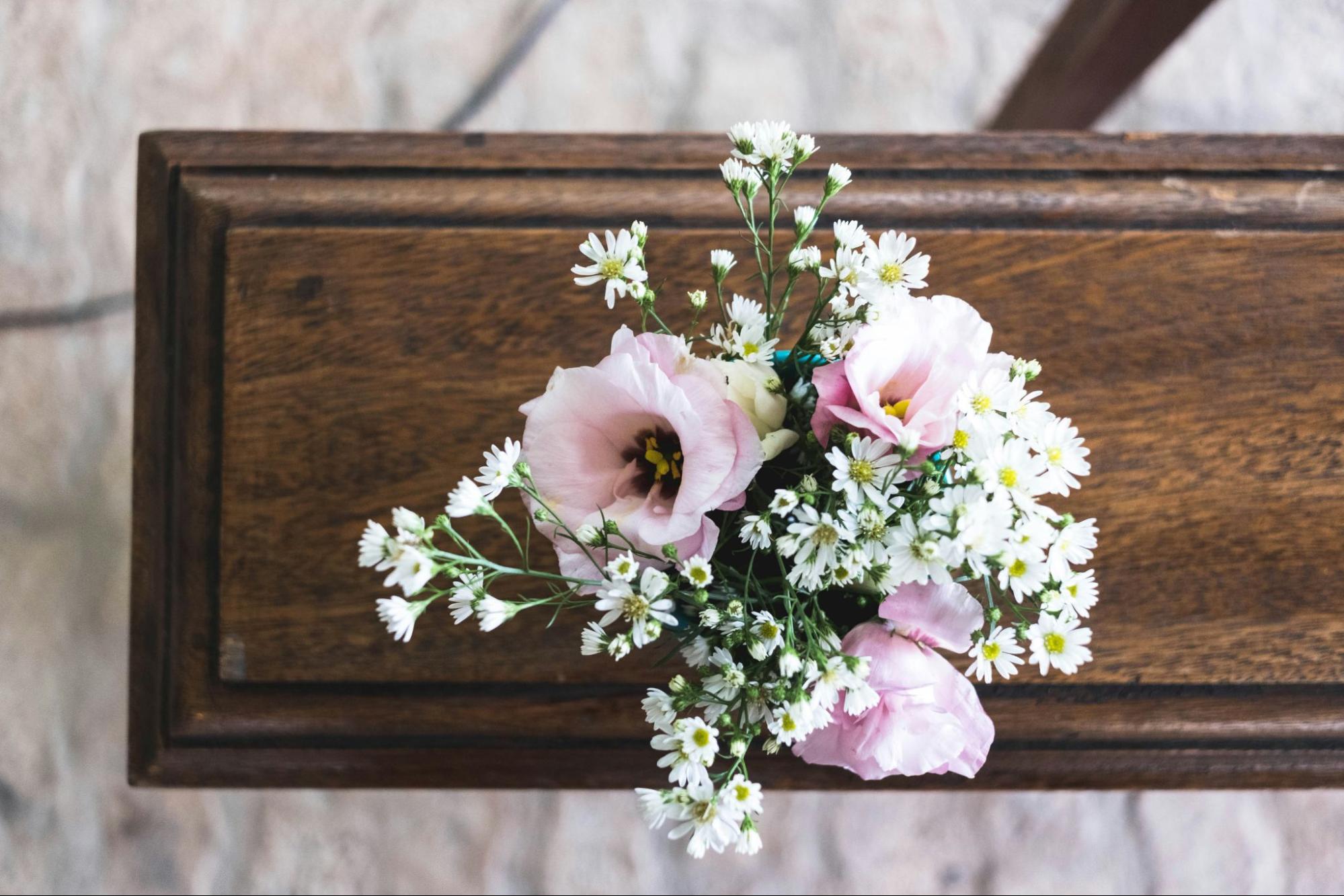
The shift toward more sustainable practices is spreading across a wide range of fields, and funerals and burial practices are no exception. Around the world, new approaches are gaining attention, including burials that use materials designed to return to nature, methods that return human remains to the soil, and systems that turn burial sites into places for conserving natural environments.

Burials That Return to Nature
Natural burial is a form of burial that is designed to return the body to nature. It may involve forgoing embalming and using biodegradable coffins or shrouds to wrap the body.
In Europe and North America, burying the dead in the ground is a common practice. It may seem that this allows the body to return naturally to the earth after death. However, conventional burials generally involve embalming the body and placing it in a coffin, meaning that the body does not necessarily return directly to nature or the soil.
Makara Cemetery in Wellington, New Zealand, has a dedicated natural burial area. To encourage natural decomposition, burial plots are dug only to the depth of the soil layer where biological activity is active. Bodies are not embalmed and are buried in coffins made from untreated wood or in shrouds. After burial, the plots are backfilled with soil where organic matter can decompose, and native trees are planted on top. Over time, nutrients and other materials contained in the body are incorporated into the surrounding soil and vegetation. Ultimately, the cemetery aims to restore the area to native forest, creating a living memorial to those buried there, as well as a habitat for native plants and animals and a place for family and friends to visit (Source: Wellington City Council).
There are also initiatives that use mushroom-based materials for coffins. Developed by Dutch company Loop Biotech, the “Loop Living Cocoon” is a coffin made from locally sourced mushrooms and upcycled hemp fiber. It is grown over seven days in Delft, the Netherlands, and can be used for natural burial, conventional burial, and cremation. Under ideal conditions, it is designed to biodegrade within 45 days (Source: Loop Biotech).
New Ways of Returning the Body to Nature
New approaches are emerging not only in burial methods, but also in how the body itself can be returned to nature after death.
One method attracting attention is “Natural Organic Reduction.” This process places human remains in a specially designed container together with organic materials such as wood chips, where they decompose in a controlled environment and are transformed into organic material that can be returned to the soil. In 2019, Washington State became the first U.S. state to pass legislation allowing Natural Organic Reduction, with the law taking effect in 2020 (Source: The Washington Post).
Another method is alkaline hydrolysis, sometimes referred to as “water cremation.” It uses water and an alkaline chemical solution, along with heat, to break down the body. Unlike conventional cremation, which uses fire to burn the body, alkaline hydrolysis relies on a chemical reaction involving water to accelerate decomposition. Bones remain after the process and are returned to the family in a similar way to cremated remains. The method is already available in 28 U.S. states, as well as Canada, Ireland, South Africa, Australia, and New Zealand. It does not directly release harmful emissions into the atmosphere, and because it does not require a coffin, it may also reduce the use of single-use coffins. In 2026, regulations allowing alkaline hydrolysis came into effect in Scotland, making it the first part of the UK to legalize the practice (Source: The Guardian).
Cemeteries That Protect Nature
The idea of protecting the land itself as part of the burial process is also gaining ground. “Conservation burial” combines natural burial with land conservation. The land used for burial is legally protected, while conservation and ecological restoration activities are carried out there.
One example is Taylor Hollow, a conservation burial ground in Tennessee, USA, established by the nonprofit Larkspur Conservation. The nonprofit Larkspur Conservation acquired land at Taylor Hollow in 2017 and established a natural burial ground there. The following year, in 2018, it donated a conservation easement on the property to The Nature Conservancy. This established a legal mechanism to permanently prevent development on the land (Source: The Nature Conservancy). Larkspur also works to conserve and manage the land through activities such as planting native species, restoring ecosystems, and removing invasive species (Source: Larkspur).
Putting Cremated Remains to Use in Nature
New approaches are also emerging that incorporate cremated remains into plant growth and marine environments.
Bios Urn, which originated in Spain, is a biodegradable container designed to return cremated remains to the soil together with a plant. The urn consists of two compartments: cremated remains are placed in the lower section, while seeds or a young plant are placed in the upper section. Launched in 2001, it is now used in more than 50 countries (Source: Bios).
In the marine environment, Eternal Reefs incorporates cremated remains into artificial reefs. In the United States, cremated remains are mixed into a specially formulated concrete and shaped into artificial reef structures, which are then placed at permitted underwater sites. These artificial reefs provide habitats for fish and other marine life. As of 2023, more than 2,500 reefs had been placed at approximately 25 sites along the coasts of seven U.S. states (Source: Eternal Reefs).

There is no single way to make funeral and burial practices more sustainable. Options include using materials that can more readily return to nature, breaking down human remains and returning them to the soil, conserving the land used for burial, and incorporating cremated remains into plants or artificial reefs. Alongside conventional approaches to death and burial, new options are emerging that rethink how we can remain connected to nature and the environment after death.
