
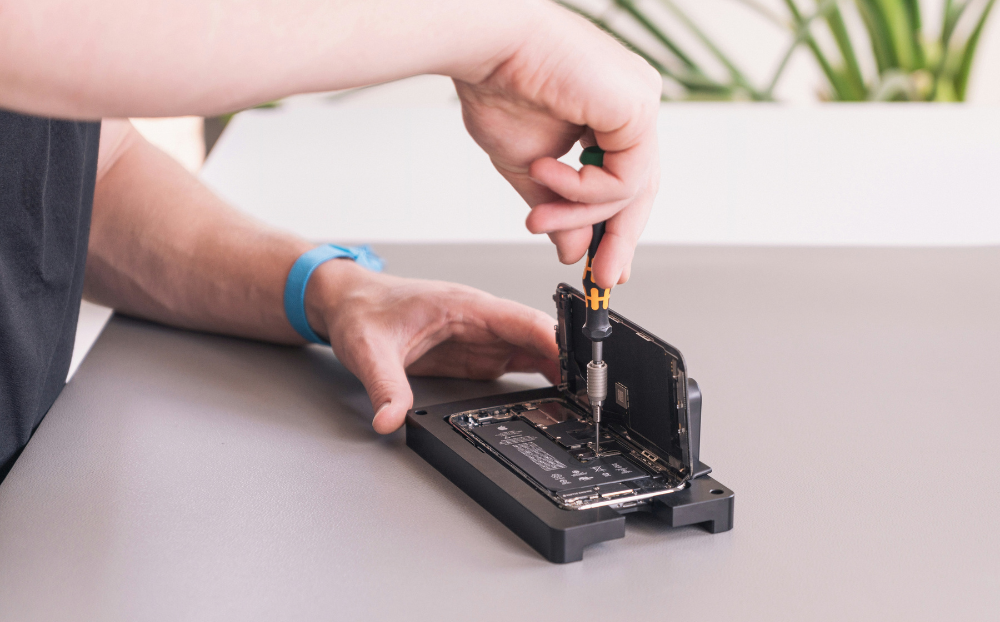
What do you do when a household appliance, a device you use every day, or something you treasure breaks? You probably find yourself weighing two options: repair it or buy a replacement. However, even when you want to get something repaired, you may find that the cost is almost the same as buying a new one, or that replacing it would ultimately be more economical. Many of us have experienced situations where we felt we had little choice but to buy something new.
In this article, we explore the social and structural factors that leave consumers with little choice but to replace broken products, along with sustainable solutions gaining traction around the world.
The Challenges of Repair
When something you rely on breaks, your first thought is probably, “Can I get this fixed?” Yet modern household appliances and smartphones have increasingly complex internal systems that are difficult for users to understand or repair themselves. As a result, consumers often have no choice but to outsource repairs to manufacturers or professional repair services.
Repair is supposed to help us keep using our belongings for longer. However, the system itself is increasingly structured in ways that steer consumers toward buying new products instead.
The Real Reasons We Replace Our Devices
Do you know the most common reason people replace their mobile phones? It is battery degradation.
In 2016, approximately 32.3% of people who replaced their mobile phones cited battery degradation as the reason. By 2024, that figure had risen to 48.5%, or nearly half of all respondents (Source: Mobile Society Research Institute). In contrast, only 9.5% said they replaced their phones because a new model had been released that year.
In other words, many people are not replacing their phones because they want new features. Instead, they are being forced to upgrade because of hardware problems, such as batteries reaching the end of their useful lives.
So why don’t we choose to repair products when they break? Psychological factors may influence our decisions. When deciding whether to repair or replace something, are you aware that you may be using an unconscious threshold known as the “30% rule”?
According to a 2015 study by the French Agency for Ecological Transition (ADEME), when repair costs exceed 30% of the price of a new product, most people hesitate to repair it and opt for a replacement instead (Sources: pivr by We Repair, RÉPUBLIQUE FRANÇAISE Liberté Égalité Fraternité).
A similar pattern has been observed in studies on smartphones. According to a 2018 German study cited in the EU law database, only 26% of respondents said they would want to repair their smartphone if the repair cost exceeded 30% of the price of a new one. A separate survey of students found that the average amount they were willing to pay for a repair was approximately 27% of the price of a new device (Source: EUR-Lex).
These findings suggest that repair costs can act as a psychological barrier, leading many people to replace products rather than repair them.
The Hidden Barriers to Repair
Cost is not the only obstacle to repairing products. Another structural problem is that repairs are often restricted to official service channels.
For example, Apple has used a technique known as “parts pairing” to protect user privacy and security. This system uses software to link the serial numbers of components within a device. However, iFixit, which describes itself as the world’s largest online repair community, has criticized this approach for making it significantly more difficult for independent repair shops to replace components (Source: IFIXIT).
In response to these barriers, companies are beginning to change their practices in response to consumer demand. Since 2024, Apple has allowed the use of certain used genuine Apple parts for repairs while maintaining security protections, helping make repairs by independent service providers easier (Source: Apple Newsroom). The company has also expanded access to genuine parts and made its specialized repair training available to more independent repair shops.
These developments reflect a growing global emphasis on creating an environment in which products are easier to repair.
Diverse Initiatives Around the World

The EU’s Right to Repair
Adopted in June 2024 and entering into force on July 30, 2024, the EU’s directive on the right to repair introduces new rules designed to make repairs easier and more affordable for consumers (Source: European Commission).
The directive encourages manufacturers to design products that last longer and can be repaired and recycled. It also requires manufacturers to make information about repair services, including prices, readily available to consumers and to provide spare parts and tools at reasonable prices (Source: European Council Council of the European Union).
Although more widespread repairs may reduce manufacturers’ sales of new products, the initiative is expected to save consumers a total of €176.5 billion over 15 years—approximately ¥31 trillion as of October 2026 (Source: EUROPEAN COMMISSION).
France’s Repair Bonus
To lower the financial barrier for consumers who want to repair products but find the cost too high, France has introduced a scheme known as the “Repair Bonus.”
Under this government-backed program, consumers can receive a direct discount of €2 to €65 on repair costs when they have eligible products repaired by an approved repairer, even after the product’s warranty has expired.
Eligible products include a wide range of everyday items, such as large and small household appliances (washing machines, kettles, and more), electronic devices (smartphones and computers), clothing, sporting goods, and bicycles (Source: RÉPUBLIQUE FRANÇAISE).
Repair Together: Repair Cafés
When something we treasure breaks, we may want to repair it ourselves but lack the necessary knowledge or know-how.
One initiative helping people overcome these challenges is the Repair Café, a community-based concept that originated in the Netherlands. At Repair Café events, participants can work together to repair furniture, household appliances, and other items with guidance from knowledgeable volunteers (Source: REPAIR CAFE).
Repair Cafés are about more than simply fixing things. They have become places where people share skills, talk, and enjoy a cup of coffee while connecting with others in their communities. Today, thousands of Repair Café locations operate around the world.
The movement is also beginning to spread in Japan, with initiatives such as Repair Café Kyoto (Source: Repair Café Kyoto). Repair Café Fukuchiyama, for example, has helped repair a wide range of items, including household appliances, small agricultural machinery, and audio equipment (Source: Fukuchiyama city).
Fairphone: A Smartphone Designed for Easy Repairs
As mentioned earlier, battery degradation is a major reason people replace their mobile phones. Even when consumers consider repairing a device, they may decide to replace it if the repair cost exceeds their personal threshold for what feels reasonable compared with the price of a new phone.
To address this problem, a sustainable smartphone from the Netherlands was designed to make repairs easy for anyone, even without extensive technical knowledge. It is called Fairphone.
Rather than assuming that a phone will be replaced when it breaks, Fairphone is designed to be used for as long as possible (Source: fairphone).
Depending on the model, the phone features up to 12 main components secured with screws, allowing users to replace parts themselves with just a screwdriver (Source: fairphone). Clear instructional videos explain how to repair key components, including the battery, display, and camera. This support makes it easier for users to address common problems when they arise (Source: fairphone).
Depending on the model, Fairphone also offers hardware warranties of up to five years and software support for up to eight years, making it easier for users to continue using their devices with confidence (Source: fairphone).
Three Actions We Can Take Starting Today
From new legislation around the world to innovative devices, the conditions for keeping products in use for longer are gradually improving. But we don’t need to buy specially designed products to make a difference. Small changes in our everyday habits can also help extend the life of the devices we already own.
Here are three practical steps you can take today to move toward a lifestyle in which repairing and reusing become the norm.
1. Rethink Your Charging Habits
Have you ever heard that using your smartphone while it is charging can damage its battery? In fact, using your phone while charging is not necessarily a problem in itself.
One of the main causes of lithium-ion battery degradation is heat. Running demanding applications, such as resource-intensive games, while charging can cause the device to heat up and accelerate battery wear (Source: SAMSUNG). On the other hand, simple activities such as checking a map or browsing the web for a few minutes are generally fine while charging (Source: SoftBank News).
According to Battery University, a website dedicated to battery information, keeping a battery’s charge level between 85% and 25% is gentler on the battery than repeatedly charging it within the 100%–50% range. Simulation results also suggest that keeping the charge level between 25% and 75% may reduce battery stress and help extend its lifespan (Source: BATERRY UNIVERSITY).
2. Use Online Repair Guides
When a device starts malfunctioning, instead of immediately replacing it, consider looking into whether you can repair it yourself.
Online repair guides, such as those provided by iFixit, offer disassembly instructions and step-by-step guides for replacing components. These resources can help you determine whether a problem is something you can address yourself (Source: IFIXIT).
The guides cover a wide range of products, from smartphones and household appliances to clothing, so you may find useful tips for repairing everyday items yourself.
However, disassembling or repairing a product can be dangerous depending on the device and the nature of the problem. If a repair seems too difficult to handle yourself, local professional repair shops or Repair Cafés may offer an affordable solution. Why not start by looking for a place nearby where you can ask for advice?
3. Consider Repairability When Buying Products
Another important and sustainable action is to ask yourself, “How easy is this product to repair?” before making a purchase.
When choosing a new product, research the likely repair costs and the availability of spare parts in advance, keeping potential future problems in mind. To get the most out of your purchase, it is worth prioritizing products that are easy to repair and affordable to maintain.
Final Thoughts
Efforts to establish the right to repair are advancing, particularly in Europe, and the conditions that allow consumers to keep products in use for longer are gradually taking shape.
Moving away from the traditional manufacturer-led cycle of replacement and toward a more balanced relationship between consumers and manufacturers requires action from consumers themselves.
Actively choosing products from manufacturers that respect the right to repair and introduce consumer-friendly policies is one way to help create a better market.
Why not start small? Check a product’s repairability before buying it, or visit a local Repair Café. By taking these simple steps, we can begin shifting toward a lifestyle in which we repair what we own and make it last longer.
Note: This article was translated from Japanese using AI. You can read the original Japanese version here.
