
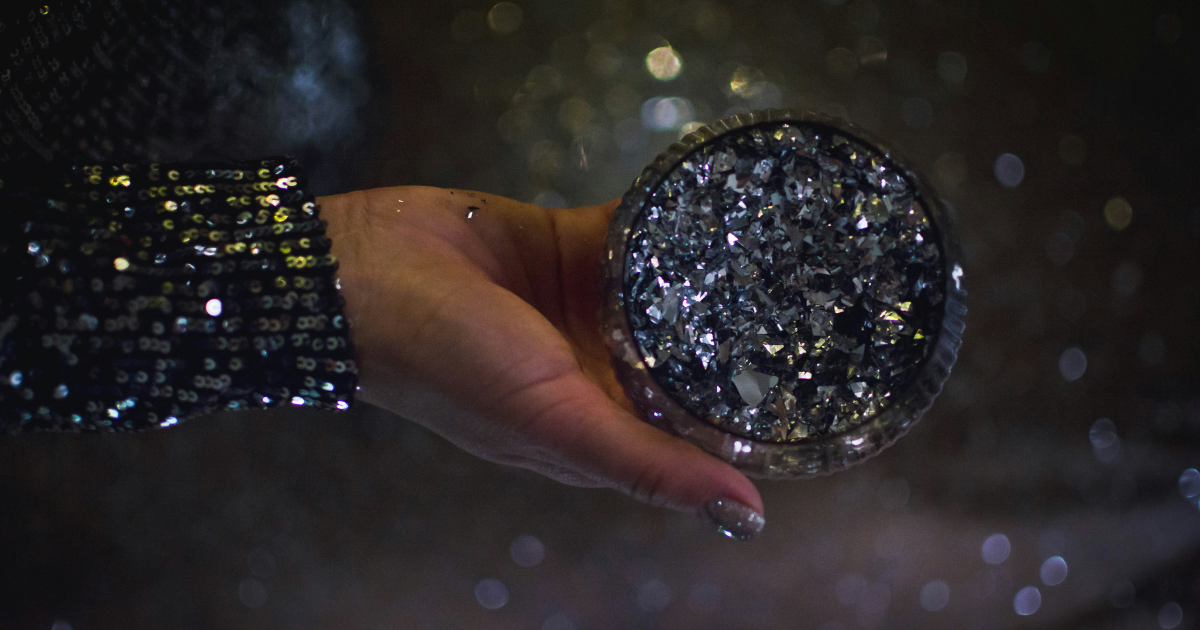
Summer is the season for stepping outside your everyday look — music festivals, fireworks displays, and outdoor events all call for a bit of extra flair. Sparkling glitter is one of the popular items for creating that special festival feel.
But most glitter is made of plastic. When it’s simply washed down the drain, it can slip through sewage treatment and flow into the ocean, potentially causing serious environmental problems.
This article explains the background of the cosmetic microplastics issue, which is now being regulated around the world, and introduces brands offering environmentally conscious, naturally derived glitter. By looking at what kinds of products and initiatives are spreading globally, we’ll explore the possibilities for more sustainable choices.
What is glitter, really? The reality of “microplastics” causing ocean pollution

Shimmering glitter and sparkle particles that reflect light are popular items in makeup, nail art, and festival looks. But much of that beautiful shine is actually made from plastic.
Once released into the environment, most ordinary plastic products eventually end up in the ocean. Plastic in the environment breaks down into “microplastics” — fragments 5mm or smaller — through abrasion on land and the effects of ocean waves and UV rays. Even once broken into tiny pieces, these fragments don’t naturally decompose, and some are thought to persist in the environment for hundreds of years (Source: WWF, “On the Problem of Ocean Plastic”).
But plastic glitter is already microplastic-sized the moment it leaves the factory.
So where does glitter go after we’re done using it? Tiny glitter particles washed down the drain during face-washing, showering, or makeup removal aren’t fully removed even at sewage treatment plants, and may flow straight into rivers and the ocean.
Microplastics that reach the ocean not only retain the additives originally contained in the plastic product, but also tend to absorb harmful chemicals floating in seawater.
Small fish eat these particles, and larger fish or seabirds then eat the small fish — through this food chain, harmful chemicals are taken up and accumulate in living organisms (Source: Wild Bird Society of Japan).
In fact, some research reports have found microplastics even in foods and drinking water we consume daily (Source: MDPI).
Regulations are spreading worldwide — the EU has already moved to ban sales
You might think, “It’s just glitter” — but the world is already taking action.
In 2023, the EU, home to many environmentally progressive countries, adopted regulations banning the sale of products that intentionally contain added synthetic polymer microparticles smaller than 5mm.
Glitter is included in this regulation, and it is set to be phased out in stages by 2035 (Source: European Commission).
Alongside the EU, the US and UK are also advancing measures against microplastic pollution. In the US, the Microbead-Free Waters Act was passed in 2015, and starting in 2017, the manufacture of rinse-off cosmetics containing microbeads was banned. The UK similarly banned the manufacture and sale of rinse-off cosmetics containing microbeads in 2018 (Source: CONGRESS.GOV, GOV.UK).
Japan, meanwhile, still has no laws regulating this. Because the country currently relies on voluntary self-regulation by industry groups, it’s all the more important that we, as consumers, sharpen our own judgment in what we choose.
No need to give up the sparkle — the “naturally derived” option
Just because you now know the environmental risks doesn’t mean you need to give up glamorous glitter makeup. What matters is comfortably balancing your enjoyment with kindness to the planet.
New types of glitter are now emerging that use plant-derived materials such as cellulose in place of conventional plastic.
One of the most well-known of these materials is Bioglitter®, developed by a UK company. It shines just as beautifully as conventional glitter, while being highly biodegradable and meeting the EU’s strict microplastic regulations. Being plant-derived, it’s used in a wide range of applications from makeup to crafts (Source: Sigmund Lindner).
For example, Berlin-based Projekt Glitter offers plant-derived glitter made with Bioglitter®. Today Glitter™ was the first company in the US to become an official retail partner for Bioglitter®. LUSH, the UK-founded brand well known in Japan too, was one of the first to eliminate plastic glitter entirely. The shimmer currently used in its bath bombs, soaps, and body powders is made entirely from “synthetic mica,” based on natural minerals, so it can be enjoyed with peace of mind.
Head to your next festival wearing sparkle that’s kind to the planet too
Learning about these new, environmentally conscious options may make you look forward to upcoming events even more. But there’s one more step worth thinking through.
Even naturally derived or biodegradable glitter isn’t entirely free of environmental impact. Research has reported that even biodegradable glitter, if released into the environment in large quantities, may affect biodiversity and ecosystem function in freshwater ecosystems (Source: ScienceDirect).
Being an “eco material” doesn’t mean it’s fine to wash away any amount of it. What matters isn’t giving up glitter makeup entirely, nor blindly trusting eco materials.
After enjoying an event, it’s important to take steps to avoid letting glitter wash into the ocean. For glitter around the eyes, for example, instead of washing your face right away, gently press a cotton pad soaked in remover against the area to lift the glitter, then wipe it away with a light sweeping motion. For glitter in your hair, rather than trying to rinse it all out with shampoo, it helps to spray hairspray onto paper towels and gently press them together to trap the glitter before washing. If glitter gets on clothing, remove it with a clothing lint roller before putting the item in the washing machine (Source: MOONSHATTER).
In this way, rather than rinsing glitter away with water right away, make it a habit to throw it in the trash first. That small extra step is a real way to help protect the ocean. This summer, why not weave a little consideration into your makeup routine, and wear a sparkle that’s gentle on both the planet and you?
